Showing posts with label Middle School. Show all posts

Wednesday, November 7, 2018

Kidzaw.com Master Kitz The Starry Night

This (last?) review of the TOS Review Crew 2018 year is a fun one! Kidzaw.com has put together some fabulous art kits for your young (or older) artist, inspired by the Masters. We were sent the Master Kitz The Starry Night, which, if you know your art titles, is obviously from Van Gogh. This made me very happy, as well as his older sister, who is an Art Ed major, and a fan of van Gogh. As a matter of fact, one of her major projects last year was a collage of the precursor to The Starry Night, and right now she is painting in oils a pair of old boots. So it's a lot of fun to have them both doing Van Gogh inspired projects at the same time, albeit 7+ hours apart. ;)

Van Gogh on the Left, Eldest on the Right for both pieces

If you visit the Kidzaw Website you will find more kits inspired by Klee, Kadinsky, Klimt, Monet, Rouge, and Hokusai. Each kit comes in a very nice, self-contained, magnet closure box, as you see here:

Inside this particular box, we found two pieces of deluxe art paper and a large Starry Night Cyprus Tree (Both rolled up, the stencil is green...) Washable (Yes! It comes off hands very well!) Blue, Black, and White Acrylic paint, 4 oil pastels (white, yellow, orange, and dark blue~ apparently the kit has been updated with a 5th, light blue pastel as well), low tack star sticker mask sheet, a Van Gogh texture roller, a sponge roller, instructions and a colorful information sheet. The Van Gogh roller has a protective covering on it when it arrives (as you see in my unboxing photo), but it has a nice texture to give the feel of Van Gogh's strokes. 

So, we are * almost done with this project~ There are a few steps involved, not the least of which is getting the paper and the stencil to lie flat (Paper is easy~ tape it down. The Stencil was a little more tricky, and after having it flat on the table overnight with the box and a few things stacked on top of it, we still needed to use tiny rolls of masking tape in strategic areas to get it to lie flat on the paper). I'll go over the process as we followed the included instructions. 
First, the star masks are placed on the upper half of the paper, then the entire paper is covered with Van Gogh strokes with the roller using blue paint, followed by a "cloudy" layer with white paint.
The star masks are removed, and when the paint is dry the stencil is laid down and the sponge roller is used to apply black paint.
After waiting for it to dry (It really is very fast-drying paint), the stencil is removed, and it is time to apply the oil pastels.

This is one of the places where we have figured out how we want to do things differently on the second piece of paper.
Probably do a blue sponge layer of paint first.
A darker layer with the Van Gogh roller of blue and black paint mixed across the top, but stopping more halfway, because we found the oil pastels didn't cover quite as well as we'd hoped.

And this is as far as we've gotten at this point. The pastels definitely take a little more concentration and time. I will say, that looking at this as a photo, from a distance, it looks much better than looking at it up close in person, which is often the way of impressionist art. :)

I am always a fan of well-done art kits that engage kids in the process and create an interest in the specific artist. Because of my Eldest's major, we do have a lot of discussion and exposure to art and artists, and Youngest was pleased to be doing something that coordinated with his big sister. I think this would be a fabulous gift to give to any aspiring young artist.

Not So Nutty Nitty Gritty 
You can visit Kidzaw on their social media pages: FacebookTwitter, and YouTube
Please click the banner below to visit the TOS Homeschool Review Crew and see what others had to say. As always, I hope that this review was useful to you as you choose where best to spend your homeschool budget.

Blessings~
Click to read Crew Reviews
Crew Disclaimer
#hsreviews #art #homeschoolart #masterkitz

Wednesday, October 3, 2018

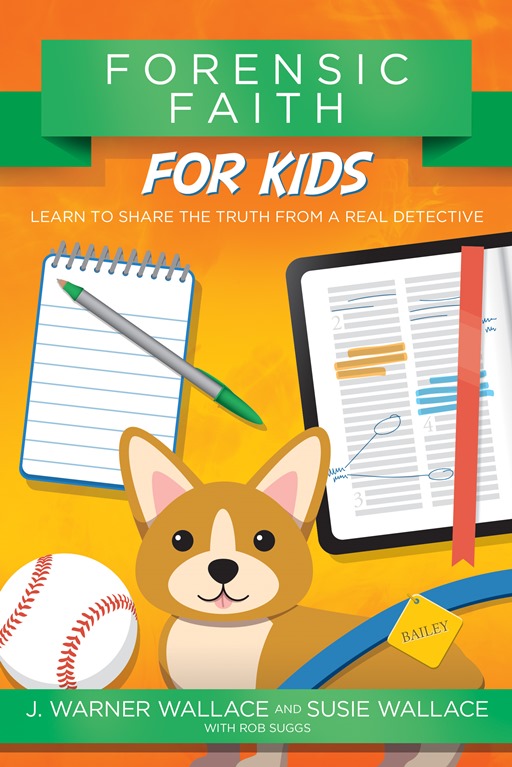
Forensic Faith for Kids (More Apologetics for kids)


A couple of years ago David C Cook introduced us to J. Warner Wallace when we reviewed the  book Cold-Case Christianity for Kids, and the accompanying Case Makers Academy website. J. Warner Wallace is a real-life cold-case crime detective who was an atheist until he was in his 30's, when he applied his investigative skills to determine the evidence for Christ. Forensic Faith for Kids is the third in his series of books for children who may begin wondering about the apologetics of their faith as well as corresponding books for adults.

The timing of this particular review was especially fortuitous because my youngest had recently been interacting with a cyberfriend, where he and other online friends were discussing Christianity and it's validity with a young person who had "all the questions." He was very concerned about her questioning the reality of God, Heaven, and what happens when we die because he felt he couldn't give her answers to make her see the truth. I told him that we can't *make anyone believe, all we can do is gain the knowledge we need to be able to plant the seeds and let God do the growing (I Peter 3:15).

Just a note* In case you might think that a book about apologetics for kids might be dull and dry~ I asked Youngest to read the intro, the preface, and the first couple of chapters... but he didn't... he read the whole thing in one sitting!

About the book:

Forensic Faith for Kids combines a story-line about a group of kids in a Junior Detective Academy, working with their local police detective to find a lost puppy's owner along with discovering how to use their forensic skills to help answer a friend's questions about Christianity.
-> See what I mean about fortuitous timing? ;) <- br="" nbsp="">
One of the key things learned is that there will always be questions, but even great court cases that are built on good evidence have unanswered questions. If they didn't they wouldn't need a jury and/or judge to determine the outcome. In the same way, we need to understand that we will never have ALL the answers (I Corinthians 13:12), but we need to make good use of the ones that we do have. 

About the Academy: 

Along with the book, the Case Makers Academy website offers many resources to help your reader engage with the story and the process of investigation.

Each chapter includes a video, a training activity sheet, an academy notebook sheet, and an adult leader guide. I will mention here that while this is perfectly wonderful to use on your own, it is set up very well to be used in a Sunday School class or as an after-school Bible club, or if you prefer, your own Junior Detective Academy.


The videos are J. Warner Wallace speaking directly to your young investigator(s) before they read the chapter. He lets them know a little bit about what they are going to be reading and gives a little background information. He really ties everything all together in the video. As a small example, in the video for chapter 4 he talks about "connecting the dots" and the activity sheet is a connect the dots activity. ;) He also encourages the kids to pay close attention to the sidebars in the book~ they are filled with Detective Definitions,  CSI Activities, reminders to Dig Deep (By completing the activity sheets and notebook sheets), "tools for the Detective Toolbox."

Here's the first video from the introduction to the book:

The Activity Sheets have fun puzzles or activities to complete (like dot-to-dot, spot-the-differences, etc...), the Notebook sheets are Fill-in-the-blank type worksheets that help to make sure your readers understand what they just read. The Adult leader guide talks about important concepts in the chapter and offers discussion question suggestions.

All around, I give David C Cook and J. Warner Wallace 5 Acorns out of 5 for an excellent resource to help train some of the youngest defenders of the faith.

Not So Nutty Nitty Gritty 
You can visit Facebook for more interaction with the Case Makers Academy.
Please click the banner below to visit the TOS Homeschool Review Crew and see what others had to say. As always, I hope that this review was useful to you as you choose where best to spend your homeschool budget.
Blessings~
Click to read Crew Reviews
Crew Disclaimer

Wednesday, September 12, 2018

Kingdom Files Series (Biblical Biographies for Kids) Review


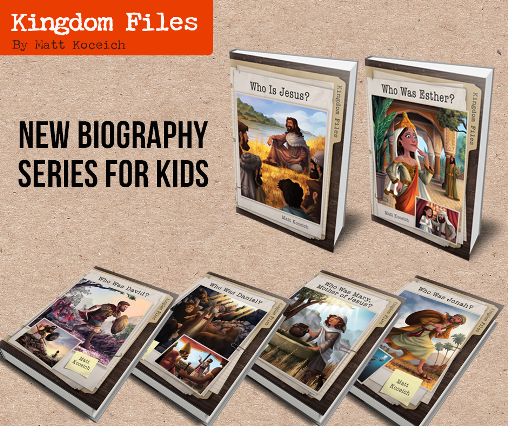
Barbour Publishing sent us two of the books from their new Kingdom Files series of Biblical Biographies for kids. The books are intended for kids ages 8-12 and are fairly quick reads at less than 90 pages each

There are currently six books in the series:  Who is Jesus?, Who was Daniel?,  Who was David?,  Who was Esther?, Who was Jonah?,  and Who was Mary, Mother of Jesus?       Each book begins with a double page "Fact File" spread that gives some basic information about the book's main character (name, town, occupation, and a mini-timeline as well as other pertinent information. The bulk of the book (dubbed the "Action File") tells the story of the character, including text from the Bible and explanations and background information. This section reminds me a lot of a what you might hear in a sermon series, but on a kid's level, split into several chapters. Throughout the Action Files there are Clue Boxes with relevant questions or ideas to provoke a little deeper thinking about a certain aspect of the story. The last section in the Kingdom Files for each book is the "Power File" which breaks out 10 Power-Up ideas that help the reader connect and apply the Scripture to their daily lives. They each also include a memory verse to go with the application.

Fact File
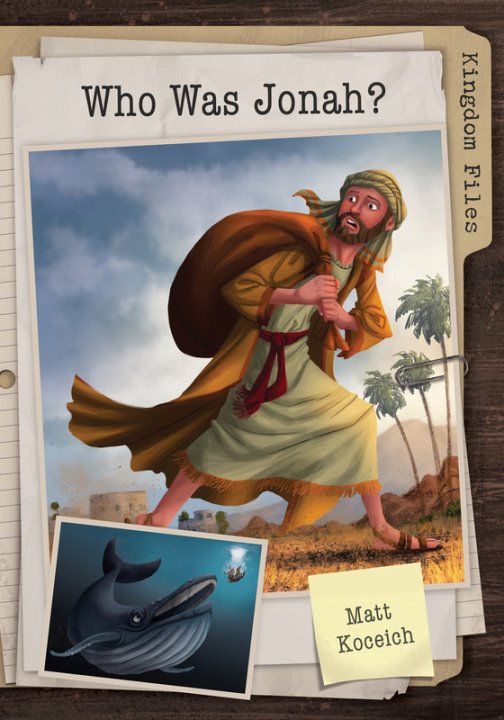
In Who Was Jonah? there are 8 chapters: 
  1. Run Away
  2. Who's Responsible?
  3. The Monster Fish
  4. Praying Hard
  5. On To Ninevah
  6. The King's Response
  7. Jonah's Anger
  8. God's Gift
I really appreciate the way that the material is covered from a narrative point of view. As I mentioned before, it reminds me of a sermon series, but on a kid's level. To some degree I wish that the Power Files specifically coordinated with each chapter, and directly followed each one, as that would make it much easier to figure out exactly how to schedule reading this book out as a devotional or regular Bible reading, but there are 10 Power-Ups with corresponding memory verses to go with the 8 chapters, which makes it a little more confusing.

Power-Up page
I will mention that The Kingdom Files webpage includes some educator ideas for extending your study of each character, with projects in writing, arts and crafts, and more, so that's worth checking out. 

The chapters in Who Was Mary, Mother of Jesus:
  1. Great News!
  2. O Holy Night
  3. Wise Men Visit (I appreciate that they are Biblically correct in not giving a specific number of magi, and also speak about them visiting Jesus in a home, not the stable.) 
  4. Jesus at the Temple
  5. A Special Wedding
  6. A Misunderstanding, the Cross, and Everything After (Also Biblically correct in mentioning that Jesus had family (brothers) beyond Mary and Joseph. Points like these are ones that rate highly when I'm perusing Children's Biblical literature. 
All in all, I am impressed with the quality of these biographies. My son enjoyed the way the books were written also, in a very conversational tone. 

Not So Nutty Nitty Gritty 
Visit Barbour Publishing on Facebook,  Twitter, and YouTube

Please click the banner below to visit the TOS Homeschool Review Crew and see what others had to say. As always, I hope that this review was useful to you as you choose where best to spend your homeschool budget.
Blessings~
Click to read Crew Reviews
Crew Disclaimer
#hsreviews  #KingdomFiles #BiographiesForKids

Friday, September 7, 2018

GrammarPlanet (online grammar lessons from Analytical Grammar)

I have heard of Analytical Grammar, but have never had an up close and personal glimpse of the program. That all changed with my review of a subscription to GrammarPlanet, their online grammar program. This program is intended for students ages 10 through adult, for learning or reviewing, and currently has 13 units, with more being added regularly until it is complete at 60 units.


When you sign up, you will be taken to a parent/teacher dashboard where you add in your students. The teacher dashboard really just shows where the students are, and allows you to see the work completed. There is no instruction or extra material covered here. I think it would be helpful (for planning and preparing ahead of time) if the teacher dashboard in the paid subscription included things like all the unit notes in a downloadable file... instead of only accessing them through the student dashboard, and maybe a little bit of explanation for the feedback pages.

After your students sign in, they are taken to their own dashboard.

For the purposes of this review, I worked through some of the program myself, and had my 11-year-old use it as well.

Each unit is locked until the previous unit is completed. Each unit includes printable notes (we just opened them up in a separate window on the computer, and usually had both windows side by side) which can be accessed by clicking the "reprint notes" button on the right side of the screen.

An instructive video is included for each unit. I had my student read the notes, and then watch the video. The video goes over the notes, with a couple of short quizzes (one or two questions) to make sure the student understands the instruction, followed by examples and a reinforcement of the process to be used when identifying the parts of speech for that Unit.

I will point out that the videos have close-captioned capabilities which I often use as another point of reinforcement (or for those who really don't like the auditory side of things, it's another walk-through of the notes with a little extra added in).

After going through the materials, the student moves on to the exercises. Each unit has 5 levels, so going through one/day would be a good pace. It is suggested that the student not spend more than 15 minutes per day on GrammarPlanet, keeping the lessons short and sweet. The exercises are essentially diagramming sentences, but they start out simply with identifying nouns, then adding in proper nouns, articles and adjectives, and so on, as shown in the outline towards the top of the review. The student gets instant feedback, showing them what they identified correctly and what they missed or misidentified.


Here is a little quirk of the program that we found somewhat confusing. In the example above the name "Father Niccolo Lorini" was properly identified using the proper noun with wings symbols  --PN   PN-- (when used on the first and last word, this added the PN in the middle automatically).
In the example below, I'm not quite sure why the PN symbols in the middle weren't added automatically when the --PN  PN-- was used on "Father" and "Physics."


In my opinion, it would be helpful if the mistakes were clickable with an explanation, especially for those who are on the younger end of the age range, which might help clear up any confusion with things like this~ or it could be a mistake on the part of the program.

My son was also getting confused by words that can be more than one part of speech (nouns and adjectives like gold and silver for example), and explanations would have been extremely helpful to him, or reminders to ask all the questions. The way the program is set up currently is great for an older student or as a refresher, but there could be a few more "helps" added in for the 10-12 year olds.

I also found the order of terms interesting, learning all things relating to nouns before moving on to verbs. I might have preferred to have subject/verbs introduced directly after proper nouns, which would have alleviated some confusion for my son. He knows what verbs are, but not being allowed to identify them for so long made him second-guess himself on a regular basis, resulting in multiple incorrect exercises.

So... what happens when a student identifies a number of words incorrectly? First, they are given extra exercises to work a little more. If there is still an issue, an email is sent to the parent/teacher advising them that there is a problem, and the account is locked so that you can go over the material with your student again before unlocking the account. A feature here that I appreciate is the ability to click on the lessons that were a problem so you can discuss what went wrong.

In this unit I had to unlock the account a couple of times... You can see that I'm checking out "Practice 12" and that the majority of the words are correctly identified, even though there is a big red X by the practice in the list on the left... the same goes for the tests where only one word was misidentified, but there is a big red X... I think those graphics could be changed to be a bit more encouraging, maybe? I will say my mathematically inclined son took issue with the concept that "A majority of the words were incorrectly identified" when he was locked out~ he actually counted his errors and wasn't pleased when they were definitely not a majority~ a significant number perhaps would be better wording here for concrete thinkers. ;)


Occasionally my son would just speed through the lesson, which led to careless mistakes, and repeated exercises... hopefully reinforcing the concept of checking his work twice before clicking submit.

After the five lessons in each unit are completed, there is a unit test (which doesn't give immediate feedback like the lessons), and the student can move on or not, based on how well they do. In the graphics I included here, a blue background is for the practice exercises, and the yellow/mustard background is for the tests.

Suggestions and room for improvement aside, I think that this program is a good tool to help your student get a handle on the English language, as they learn when, where, why, and how words are used the way they are. You can check it out for free and see what you think yourself. For kids who absolutely hate writing, this can be a boon, and for the parents, it does the correcting for you, which can also be greatly appreciated.

When I asked my son, he says he gives GrammarPlanet a B+ (that boy!). He found the content interesting,  he liked the feedback, and thought the notes were well done. In spite of some of his frustrations he felt overall the system was good, and even though it took him longer to get through some units, he feels like he is learning well.

Not So Nutty Nitty Gritty 
  • Company: GrammarPlanet
  • Product: no-ad online subscription
  • Ages: 10-99+
  • Price: $39 which covers the program until they get all the way through, no time limit.
You can visit GrammarPlanet on the Analytical Grammar social media pages on Facebook, Twitter, and Pinterest

Please click the banner below to visit the TOS Homeschool Review Crew and see what others had to say. As always, I hope that this review was useful to you as you choose where best to spend your homeschool budget.
Blessings~
Click to read Crew Reviews
Crew Disclaimer
#hsreviews  #GrammarPlanet #grammar #onlinelearning

Thursday, July 26, 2018

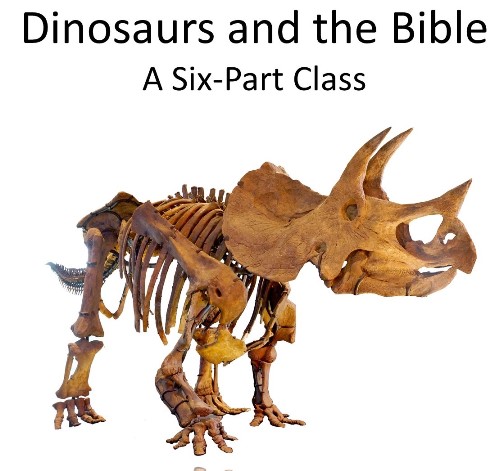
Northwest Treasures ~ Dinosaurs and the Bible (An online Geology classreview)


Northwest Treasures is a nifty little niche company (based in Washington state) that offers online and live classes in geology, as well as field trips and educational kits, all with a Biblical Worldview. We were offered two of the online classes to choose from for the purposes of this review: Dinosaurs and the Bible, and Geology and Apologetics, as well as Taking the Mystery Out of Geology. I chose Dinosaurs and the Bible, as I figured it would have the broadest appeal for our family, although we are all interested in Geology, rockhounding and such. (I seem to have passed on my interest which was definitely nurtured by growing up in the fossil and rock rich state of Montana, with a history buff for a father, and a rockhound for a grandfather. ;) )

Here is a trailer to give you a feel for this particular class:


Trailer of the Dinosaurs and the Bible class from Patrick Nurre on Vimeo.

Each lesson runs around 20 minutes, and comes with a worksheet (Set of 8-13 questions) to check comprehension and retention of the information found in the lesson. These worksheets are a little tricky to locate, so here are some instructions (that I think could be included on the course page).
When you are logged in (on a computer), there is a list of lessons with a "watch" button following each one. It isn't clearly obvious that the lessons themselves are clickable links that bring you to an overview of the lesson and links to the worksheet, and answer key (the answer key only needs to be downloaded one time, as it covers all 6 lessons). 

The final lesson also includes a 15 question multiple choice exam that covers information from the entire course.

The lessons are pretty much Vimeo powerpoint slide presentations (We watched on our TV via the Vimeo Roku channel, but you can also watch in a browser on your computer or tablet), with narration/instruction by Patrick Nurre. Through each of the videos, Patrick discusses the differences between Secular Paleontology and Christian Geology, always bringing it back to the framework of the Bible, as well as pointing out inconsistencies promoted by Evolutionary theorists and noting when Science becomes confused with Philosophy...

One of the things I particularly appreciated was the placement of the scientists in historical and geographical context, which helped to explain some of their philosophy and personal opinion/conjecture. The lessons progress from general discussions of the modern secular view of dinosaurs (and how it came about), their classification, to discussions of the catastrophic events that would have caused their demise and fossilization. All very interesting and intriguing for both my 11-year-old and myself. The lessons are:

  • How We Got Our Modern View of the Dinosaurs 
  • The Classification of Dinosaurs
  • The Great Dinosaur Rush
The first three segments are more historical/technical aspects of the discussion, the terms, and classification. The last three highlight the Biblical answer of "how" the extinction occurred, and the fossils were created... something that eludes those who hold a secular view, but so simply explained in the Bible. 
  • The Extinction of the Dinosaurs
  • Dinosaurs and the Ice Age
  • Fossils, Age, and Soft Tissue
I particularly enjoyed the last two lessons, as they referenced my home state, Yellowstone National Park, the Gallatin Valley, and other National Parks we visited last year as a family including Devil's Tower and the Petrified Forest. I grew up hunting for fossils (Although sadly I don't know what happened to the trilobites and others that were discovered on hikes and outings as a kid) and petrified wood. Thankfully I still have the chunks of petrified wood that I found as a kid in the Gallatin Valley. 

my petrified wood, crystals, and a piece of jewelry created by my rockhounding grandfather

I mentioned the worksheets at the beginning of this review, and I would suggest that if you are using them with kids on the younger age that they are printed up and used as a note-taking exercise while watching the video. Older students could use them as quizzes...


Taking the Mystery Out of Geology clarifies 13 terms that are frequently used in the field of Paleontology and Geology and shows how Science, History, and the Bible really do go together. 

As mentioned at the end of each of the video lessons, Northwest Treasures offers kits and hands-on material to enhance the lessons, and they also offer field trips to those fortunate enough to live in the Northwest, and/or those who have funds to travel for school. My father had moved out to the Glendive area where the Dinosaur and Agate Expedition tour takes place, and I would highly recommend anyone able to participate to do so. The Glendive Dinosaur and Fossil Museum doesn't get the press of the Creation Museum, but it is actually a larger facility and extremely close to the dinosaur site digs. We found it fascinating when we were there in 2016, and would have loved the opportunity to go to the fossil fields (weather and time constraints did not permit...). 

Glendive Dinosaur and Fossil Museum

I understand that they offer some classes on SchoolhouseTeachers.com, and while I haven't personally used/checked those out, if you have a membership and are interested in Geology, I expect they are well worth checking out. ;) 


Not So Nutty Nitty Gritty 
Visit Northwest Treasures on their Social Media Channels on Facebook and Pinterest 

Please click the banner below to visit the TOS Homeschool Review Crew and see what others had to say about this and the other two courses. As always, I hope that this review was useful to you as you choose where best to spend your homeschool budget.
Blessings~

Online Geology Classes{Northwest Treasures Reviews}

Crew Disclaimer
#hsreviews  #geology #dinosaurs #apologetics

Thursday, June 7, 2018

Memoria Press (Classical Composition I: Fable Set) A Review


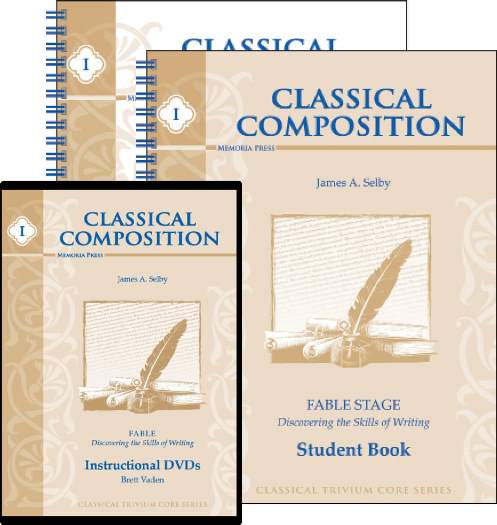
When Memoria Press offered us a selection of products to review, I chose to introduce my Youngest to their Classical Composition I: Fable Set. This set includes the Student Book, the Teacher Guide, and Instructional DVD. I appreciate that both the instructional DVD and the Teacher Guide are included, as this opens up options for student work location. Not always tied to electronics (Instructional DVD) to do the work, because the Teacher Guide includes the instructions required, which means that lessons can be taken outside, to the park, or in the car. However, it is also very nice to have the option to have someone other than Mom or Dad "teach" the lesson, particularly if one isn't as familiar with walking through an outline with their kids.

OK, so now that I've given you a little hint to the content, let me tell you how the lessons are set up. As is typical with Memoria Press, each lesson looks pretty much the same, and they basically drill the concept over and over until it becomes natural.

  • Fable ~ The specific fable for the lesson is printed at the beginning of each lesson
  • Three Plot Components (If applicable) of Recognition, Reversal, and Suffering
  • Variations Part 1 ~ Student comes up with synonyms for 3 or 4 words in a given sentence and then rewrites the sentence three different ways. 
  • Narration (Not in the Student Book, but definitely a component of the lesson, and one of my favorite parts! :) )
  • Outline ~ Summarize fable in outline form. This is a very useful skill to work on, so I appreciate that it shows up in each lesson. The Teacher Guide includes suggested outlines, so you can work from that directly, but the walk-through on the DVD is also valuable. 
  • Paraphrases ~ Generally two paraphrases per fable. The first generally adds in specific Figures of Description (using the Latin names for each one*), and the second is usually written "by reduction" in the briefest form possible without any descriptors.
    • *The Appendix includes 18 Figures of Description with examples for each. These words may or may not be familiar to you, depending on your experience with Classical Education. Here are a few: Anemographia, Dendrographia, Dialogismus, Effictio, Prosopographia, Sermocinatio... These are things that I certainly didn't learn in my public school education. ;) 
  • Variations Part 2 ~ Same thing as Part 1, but with different words/sentences
  • Appendix~ I mentioned the Figures of Description above. The Student Book also includes an "Introduction to the Progymnasmata" by James A Selby, that might be interesting for an older student to read. 

The Teacher Guide begins with teaching guidelines and an advanced rubric for grading purposes. The rest of the book has identical pages to the student book, with instructions specific to each lesson, including vocabulary words, and a more general grading rubric geared to that lesson.

If Classical Education is your style, Memoria Press definitely offers materials that will challenge your child, with ample opportunity to practice the skills that they are being taught.


One minor point that I will mention here~ if you have a student for whom handwriting still isn't smooth and natural, the lines and spacing of the Student book may be a little short. On his best days, his handwriting isn't fabulous, but the more college ruled spacing definitely contributed to a bit of a defeatist attitude. When I suggested that he write his outline on a piece of wide-ruled notebook paper (and do it in cursive), the readability improved drastically. Still not fantastic, but better.

Memoria Press offers sample pages of the Student Book and Teacher Guide as well as a "General Sequence and Outcomes of Program" to download on the product page linked below.


Not So Nutty Nitty Gritty 
Visit Memoria Press on their Social Media pages on  Facebook, Twitter, Pinterest, Instagram, Google+, and  YouTube

Please click the banner below to visit the TOS Homeschool Review Crew and see what others had to say about this and the other products that were offered for review: Products from the New American Cursive Penmanship series, the Traditional Logic Series, and the Classical Composition Series, of which Fables is the first part.

As always, I hope that this review was useful to you as you choose where best to spend your homeschool budget.
Blessings~

New American Cursive & Traditional Logic {Memoria Press Reviews}

Crew Disclaimer
#hsreviews  #memoriapress  #classicalchristianeducation  #classicalyhomeschooling  #Classical CompositionI:FableSet  #classicalchristianhomeschooling  #memoriapresscursive

Followers

LinkWithin

Related Posts with Thumbnails