Showing posts with label Apologia. Show all posts

Thursday, September 7, 2017

Marine Biology!


While I've had the opportunity to review many of Apologia Educational Ministries' new products as they roll out, I've not had a chance to review any of their science curriculum since my first year reviewing (2008/2009) when I reviewed Flying Creatures of the Fifth Day, and the basic General Science set. However, I have used many of their other science texts for elementary, and up through high school, so I was very pleased to be able to review one I hadn't seen/used yet, their Marine Biology 2nd Edition Advantage Set. The set comes complete with the student text, student notebook, solutions and tests book, and test booklet. We were also sent the Marine Biology 2nd Edition Audio CD.
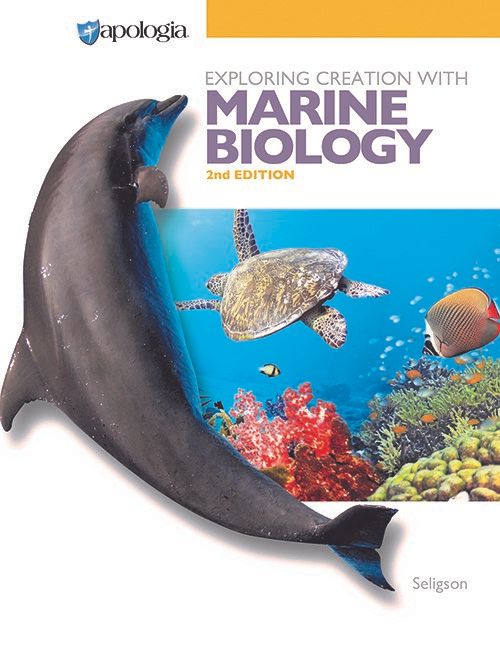
As is typical with Apologia, the material is written directly to the student, and is easily understood. There are some things about this text that I really like from a visual point of view, that are different from the other editions I own (General Science, Biology, Chemistry, Physics...):

  • A colored strip running across the top of the page that lists the module
  • A "tab" along the length of the page that also lists the module, and can be seen when the book is closed, making it easier to find your place as you get further into the book (the Glossary, Appendices, and Index are also "tabbed" this way). 
  • Vocabulary words are boldly set apart and defined on the page where they are used in the text. This gives an extra emphasis and repetition, for memory retention. While the other texts did this as well, the definitions just didn't stand out in the same way. 
  • On Your Own questions are set apart with a colored background and "sea coral" motif~ hard to miss them when they don't blend into the text! :) 
Following the normal Apologia format, the answers to the "on your own" questions are found at the end of the module, followed by a study guide for that module. Module Summaries are found in the back of the book in Appendix B. This means that for the vocabulary and important information found on the test, review is built in. 
  1. Read the text (Some vocabulary twice if it has been highlighted outside the text)
  2. Do the On Your Own Questions 
  3. Complete the Study Guide
  4. Answer the Module Summary questions in the back of the book
  5. Take the test 
The Material covered in this course (with my mini-summaries) includes:
Module 1: The Oceans of Our Planet ~ including how they were formed
Module 2: Life In the Sea ~ how living organisms live and reproduce in the sea 
Module 3: The First Four Kingdoms (Microscope Labs) ~ study of simple marine plants and animals
Module 4: Marine Invertebrates I~ Simpler invertebrates (Jellyfish, worms, etc..)
Module 5: Marine Invertebrates II (Dissection and Microscope Labs) ~ Mollusks, Crustaceans, etc... 
Module 6: Marine Vertebrates I (Microscope and Dissection Labs) ~ Jawless, cartilaginous, and bony fish
Module 7: Marine Vertebrates II ~ Reptiles, Birds, and Mammals
Module 8: Marine Ecology ~ the balance of creation~ organisms with one another and their surroundings
Module 9: The Intertidal Zones ~ Let's go to the beach! 
Module 10: Estuarine Communities ~ special ecosystem that is neither saltwater nor freshwater
Module 11: Coral Reefs ~ Complex communities
Module 12: Continental Shelf Communities (Microscope Labs) ~ learn about soft-bottom shelf and hard-bottom shelf communities
Module 13: The Epipelagic Zone (Microscope Lab) ~ the upper layer of the oceans, and what lives there (most of our food sourced from the sea can be found here)
Module 14: The Deep Ocean ~ "inner space" creatures, and much that is unexplored
Module 15: Ocean Resources ~ food, medicine, industrial resources (oil and minerals), freshwater, and energy
Module 16: The Effects of Humans on Oceans ~ Negative impacts, and how we can be better stewards of the ocean, while not neglecting those who rely on it to survive. 
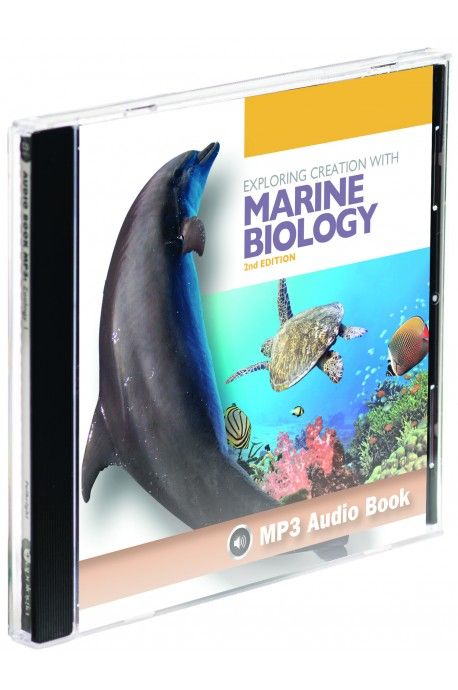
This is the first time that we have had the Audio CD Narration to go along with the text. The narrator (Marissa Leinart) reads the entire text with the exception of the text in the Figure graphics. She has a pleasantly modulated voice, and I believe the Audio CD would be very beneficial to the auditory learner, or to a reader who has difficulties~ they could listen to the audio while following along in the text. I can't imagine narrating an entire textbook, so when the few occasions arise that Marissa uses a different emphasis than I would if I were reading aloud, I definitely cut her a little slack. By and large she is very easy to listen to. Having the Audio CD is a great option if you are a family that is in the car a lot~ studying can be done on the way without reading-induced car-sickness! 
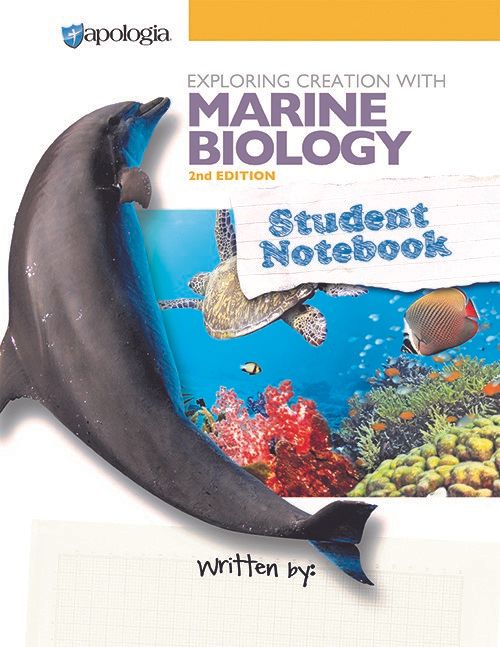

The other resource that we used for the first time was the Student Notebook. This was a favorite feature for my son. He loved the way it was set up, so that it followed the text with the On Your Own Questions, the Study Guide, and the Summary directly following. His feeling is that this makes studying for the test much easier because all of the information is right there in front of him. He doesn't have to look from the text book to his notebook to find the answers to each question, it streamlines the entire process.

I also appreciate that it lays the grading process and the schedule all out for the student. It really is intended to be a mostly self-directed course, which is appropriate for upper high school classes.

There are a number of note pages (at the beginning of each new module, prior to the On Your Own questions), that Middlest will be working on learning to use. Note taking is not a skill that I've emphasized (as I don't lecture my one person class), so using this Marine Biology course could help him gain this essential ability.
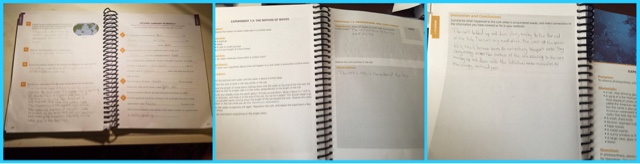
1. Study guide questions and Summary Questions, 2. and 3. Lab Experiment notebook

The back of the Student Notebook contains all of the experiments, their directions, and Lab Sheets to record the experiments, with space for the Hypothesis, Observations, and Discussion and Conclusions. This makes it so easy to keep everything in one place, and having the instructions for the experiments right there means only one book to deal with during the experiments. I am a big fan of efficiency!

A word about the experiments here. Once again, Apologia comes through with a Lab Science course that is thorough, but takes into account a homeschooler's budget! There are some that require a microscope with prepared slides, and I counted 3 dissection experiments (shudder... not my thing), but everything else can be completed with household or easily obtainable items.
     
The Tests and Solutions book, as always, includes all of the tests (Which can be copied) and their solutions (with grading points given, which makes life so easy for the teacher!), as well as solutions for the Module Summary questions. 

Apologia has another winning Science text on their hands, with this Marine Biology course written from a Christian Worldview. I so value the apologetics built into these courses, that give my kids a solid foundation to discuss Christianity AND science, and how the two DO connect and support one another.

If you want to check it out yourself, there is are samples from the first module found on the product page (see below) under the "downloads" button.


Not So Nutty Nitty Gritty 
Visit Apologia on Facebook, Instagram, Twitter, and Pinterest

Please click the banner below to visit the TOS Homeschool Review Crew and see what others had to say. As always, I hope that this review was useful to you as you choose where best to spend your homeschool budget.
Blessings~
Click to read Crew Reviews
Crew Disclaimer
#hsreviews #MarineBio #homeschoolBiology

Thursday, June 15, 2017

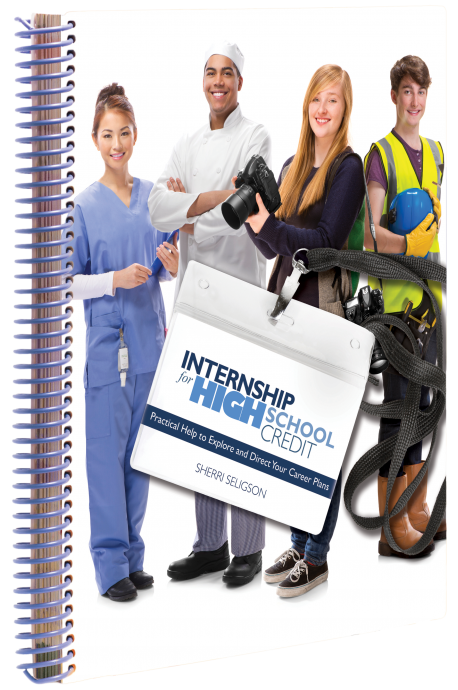
Can you use an Internship for High School Credit ? (A Review)


Apologia Educational Ministries could be considered one of the cornerstone companies in the Christian Homeschool Education Publishing world. They have branched out from their most well known original science curricula to many other homeschooling subjects and helps, including one of their latest offerings, a workbook on Internship for High School Credit.

Internship for High School Credit is a spiral-bound 99 page workbook intended to introduce the concept of considering internships during the high school years, as well as practical helps in making an internship happen for your student AND offering credit for that internship on a high school transcript.

The Introduction to the book discusses reasons for internships and helps to assess whether an internship might be a good fit for your child.

Part 1 is written to the student~ "Getting Started"
Each one of the sections in Part 1 include discussions about making decisions, and/or practical tips and helps. The contents include:
  • Determining the Type of Internship
  • Choosing a Company
  • Preparation
  • Receiving High School Credit ~ this is a particularly helpful section, as it gives the student information on how to determine what credit(s) they plan to receive, how many, and how to organize their schedule to reflect that. 
  • Writing a Resume'
  • Letter of Introduction
  • Sample Student Resume'
The Resume' and Letter of Introduction segments offer helpful information on organizing these important documents as well as some samples which can be used to model their own resume's and Letters of Introduction. I always find it easier to figure out something like this when I have a bit of a template to follow! 
  • The Interview
  • After the Interview
  • Gearing Up for the First Day
Again, these sections offer practical suggestions (for example, try to memorize the interviewer's name, even if you only learn it at the interview itself~ that makes a good impression) and helps as the student moves into the area of actually getting an internship.
  • Part 2 is written to the parents~ "Information for Parents" with discussions about:
  • Choosing an Internship Location ~ gives some practical questions to think about when contemplating a specific company (an example... Do the employees bring their lunches, or eat in restaurants or order out regularly~ these are good things to consider, that I wouldn't have thought of on my own~ is it financially feasible for your child to intern at a specific company/location baed on the practical aspects of the job). 
  • Child Labor Laws 
  • Transcript Documentation
  • Course Title and Number
  • Number of Credits
  • Grades
All of these sections offer suggestions on the practical side of creating your own course through the internship, and how to go about it. Nothing is laid out precisely, because there are so many variables and options for possible internships, but there are concrete examples of hours required and credits assigned. 


Parts 3-5 return to the student.
Parts 3 and 4 are the practical workbook section, one for each semester, and include

  • How to Use the Worksheets
  • Semester Goals
  • (<--- eekly="" example="" li="" nbsp="" worksheets="">
  • Evaluation sheets
  • Midterm and Final Work Performance assessment pages (For work supervisor to complete~ see example below)
  • and Summary pages.


Part 5 wraps everything up in a neat package by suggesting final writing assignments for the student ~ one to summarize their experience, and a thank you note to the company providing the internship. It also discusses asking for a letter of recommendation and updating your resume'.

My son isn't able to apply for an internship this summer due to various activities and family commitments, but he definitely appreciated how well the book is laid out~ simple and clear without any confusing elements.

I appreciate the idea of an internship, as it is a good way to determine what our children are interested in doing for the rest of their lives. So much better to find out waaaaayyyy before college that an accounting office (or a dental office, or a landscaping company) are exactly the sort of atmosphere where your child will either flourish or fade, and will help to make future decisions that much easier (And if they can get high school credit at the same time, so much the better!).


Not So Nutty Nitty Gritty 
You can visit Apologia on their social media pages:
Facebook, Twitter, Pinterest, Instagram, Google+, and  YouTube and you can find sample pages and FAQs if you click the yellow download button on the product page.

Please click the banner below to visit the TOS Homeschool Review Crew and see what others had to say about this book, as well as How to HOMESCHOOL with Stunning Confidence, Contagious Joy, and Amazing Focus (DVD &Coursebook) a help for homeschooling parents. As always, I hope that this review was useful to you as you choose where best to spend your homeschool budget.
Blessings~
Click to read Crew Reviews
Crew Disclaimer
#hsreviews  #homeschoolsupport #startinghomeschool #organizing #howtohomeschool  #highschool #highschoolcredit #internship

Thursday, June 11, 2015

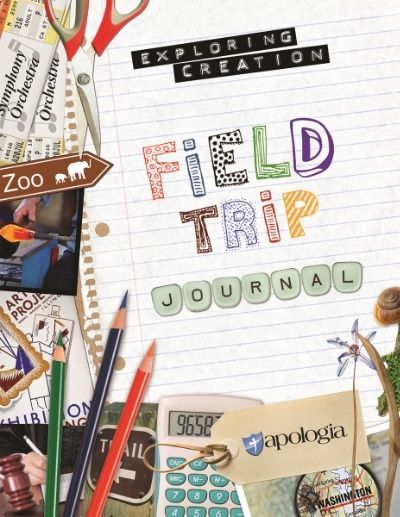
Apologia Educational Ministries/ Exploring Creation Field Trip Journal

Ever feel like you'd like to add some pizzaz to your field trips? How about actually keeping track of the field trips you go on, seasonal changes in a local spot, or personal expressions of creation observations? Apologia Educational Ministries has come out with a pretty snazzy product to assist you in that endeavor! Oh how we wish that the Exploring Creation Field Trip Journal existed when we took our cross-country road trip in 2006! 
Now, I will be upfront and say that I was excited about this review item, because my youngest's field trip record is rather slim. This is due *mostly* to our acquisition of a lovely retired service dog. She has put a major cramp in my homeschooling style~ because she can't be left home alone, and she also can't go to most field trip locations. ARGH! What's a homeschool mom to do? 

Well, we've had to be creative, and I'm afraid that for the purposes of this review, we were once again not able to go on a "traditional" field trip (I had plans, but between baseball and the weather... well, let's just say we're looking forward to more free time, and good weather for some of the animal friendly, or "Mom and Youngest" options out there). 

Here is where the Field Trip Journal comes in. Yes~ there are FABULOUS pages for specific, planned, LOCATION field trips (ie: Museum, Nature Preserve, National Park, Historic Site). These will, as mentioned above, get filled in a little more slowly in our journal...  But there are also a number of pages that are more open-ended, and less structured.
Fabulous field trip pages~ *not true to size, and some are not to scale
Included near the front of the journal are a couple of pages with nine to twelve field trip suggestions in ten specific categories (that's over 100 field trip ideas, folks!). I'm showing the most general suggestions, to give you a feel for it, but many of the other ideas are unique and creative (Could you find lists like this elsewhere? Probably~ but not packaged quite as nicely). 
  • Plants: Arboretum
  • Animals: Animal Shelter
  • Earth: Water's Edge
  • Space/Aviation: Local Airport
  • Human Body: Dentist's Office
  • History & Govt': City Hall
  • Municipal: Police Dept
  • Business: Bakery
  • Culture: Art Museum
  • Other: Camping 

The point here is that you can find a field trip anywhere, even in your own back yard, or up the street! What a relief! :D Apologia has also included one of their "Book Extras" codes for those who purchase the journal. This brings you to a page on Apologia's site filled with loads of field trip advice and suggestions. What a fantastic resource this is. 

My Eldest is quite taken with this Journal~ the feel of the pages (they are sturdy and smooth to the hand), the graphics "I love the lettering, Mom! They are all so different." (they speak to her scrap-booky heart), and her favorite pages ~ the open-ended, creative pages (As I See It), where she can doodle and draw... :) Here is a portion of one of the As I See It Pages~ Eldest sketched a flower she saw in Guatemala on her Missions Trip (How's that for an International Field Trip?). The photo doesn't show the whole page, but I anticipate if becoming a "Flora I've Seen" page for her.  

This will most likely become a "Family" book, with various people contributing, as we explore God's Creation all around us. It's clearly great for the artistic child, and I believe that the Middlest "Nature Boy" will benefit from the "My Special Spot" pages, while Youngest will get in a few traditional field trips, as dog, schedules and weather allow. 

I think this journal has the potential to earn an honored place in the homeschool book/travel bag of many families (Don't forget the colored pencils~ if you have a polaroid camera, that would be a plus too!). 

You can visit Apologia Educational Ministries online: Facebook, Twitter, Pinterest, and Google+

Not So Nutty Nitty Gritty 
Please click the banner below to visit the TOS Review Crew and see what others had to say. As always, I hope that this review was useful to you as you choose where best to spend your homeschool budget.
Blessings~


Click to read Crew Reviews
Crew Disclaimer

Friday, October 17, 2014

Apologia iWitness Review (Eye-Witness? The Bible iWitness)


Biblical history is fascinating, particularly when used as part of your apologetics. And now Apologia Educational Ministries has come out with a new iWitness series of books to help explore the eye-witness facts that support the veracity of the Bible. We were sent three books from the series to review: iWitness Biblical ArchaeologyNew Testament iWitness,  and Old Testament iWitness.

The books are thin volumes of 64 pages each, with glossy, full-color (Somewhat busy) pages. This is a two page spread from the Old Testament iWitness book~ you can see that there is a LOT going on here! 
The books present a considerable amount of very interesting information that may answer many questions before they are even asked. How were the books included in the Canon of Scripture chosen? Why weren’t the Apocryphal and other historical Jewish books included? How are the texts for translation chosen? Do we have any degree of certainty that Noah’s Ark was real, and if so, where it may have landed? There are some bits about other things like the Shroud of Turin that I found fascinating.
    
Middlest on Old Testament iWitness: He was struck by how meticulously the Hebrew Scribes copied the Bible, not even one word at a time, but one letter at a time, counting the words, counting the letters, and counting to the middle of each book to be certain that they didn’t forget anything.  He was amazed to learn how the “change over time” argument doesn’t hold water based on studies of the Dead Sea Scrolls and the accuracy of manuscripts from 1000’s of years later.
    
Eldest~ on iWitness Biblical Archaeology: She has been enjoying how well this book ties in with her current study on Bibilical Archaeology. She was particularly intrigued with the portion on the flood and the search for Noah’s Ark. There were facts and photos that she had never read before that opened up more interest in those topics.
     
I found New Testament iWitness to contain a lot of information on the process of translation, and how decisions are made on which texts were more likely to be the most reliable. In the final analysis, given the evidence, we can be certain that 99.5% of the Bible we read today is true to the original text, with any variations being minor and not of any major doctrinal concern.


Pros~ Very interesting information that answers a lot of questions before they are even asked. How did we get the Bible? How can we conclude that the books included in the Bible are the Word of God, and that others *not* included in the Canon of Scripture are not. 
Our only con: the Graphic layout
While the fonts used are very interesting, they are somewhat difficult to read, even for those with young eyes... Both of my older children found the text type to be more than they wanted to deal with, and they preferred that I read the text to them!

With all of the background busyness, this could be a difficult book for someone who prefers a clean page to look at. There are those who can’t process information with that much distraction, so I wouldn’t recommend it in that case.


On the other hand, my youngest was engaged in looking at all the background graphics as I read to his siblings, although he was somewhat disappointed that the text was too fuzzy OR in a language that he couldn’t understand… ;)

If you or someone you know is interested in learning how we can be sure the Bible contains eye-witness accounts, you may find that the iWitness books are just what you are looking for. 

Side note: the author, Doug Powell graduated suma cum laude with a Masters in Apologetics from Biola University in 2007.

You can visit Apologia online: Facebook, Twitter, Google+ , and Pinterest
Not So Nutty Nitty Gritty 
Please click the banner below to visit the TOS Review Crew and see what others had to say. As always, I hope that this review was useful to you as you choose where best to spend your homeschool budget.
Blessings~


Click to read Crew Reviews
Crew Disclaimer

Friday, July 25, 2014

Apologia's "Flourish: Balance for Homeschool Moms" TOS Review Crew


Confession: I often wish there were more hours in the day, and sometimes I wish that someone would come and help me figure out how to reinvent my life (my physical space AND my schedule) so that I wouldn't feel like I am fighting a battle against entropy (is that a common feeling amongst homeschool moms, or even moms in general? I suspect possibly so). This is one reason why I was intrigued by a new offering for homeschool moms from Apologia Educational Ministries, the new book by Mary Jo Tate, Flourish: Balance for Homeschool Moms

Mary Jo has penned a book filled with exercises and examples intended to help stop the juggling of too many balls (Because will inevitably fall), and instead assist in finding balance, with the tools to fine-tune that balance when something pushes(or pulls) away from that equilibrium. Mary Jo is also transparent and down-to-earth, sharing many of her been there and done that stories. I always appreciate seeing the real side of an author, as I find it inspirational when dealing with similar matters in my own life. 

Flourish is written to both a broad and a narrow audience~ It is a useful book for any homeschool mom, but especially one who is struggling with a sense of inadequacy, the feeling that they are facing an overwhelming task, or dealing with general chaos. It is also written particularly towards those moms who not only school at home, but are working, or hoping to start working a home business alongside their schooling, and a final even more pinpointed category, suggestions to support the single/work-at-home/homeschooling/mom. 


The first chapter is a bit of an introduction to the book, and then Mary Jo jumps right in with great ideas on prioritizing your life. She starts with a few categories, and then gives a plan that begins with the big "Life Time Goals" and then narrows down to the focused weekly and daily plans, offering many tools to help get the job done. 
Chapters in the book: 
  1. An Invitation to Flourish
  2. Change Your Mind to Change Your Time
  3. The FREEDOM Toolbox
  4. Where Did My Time Go?
  5. Aim High: Setting Goals
  6. What Do I Do Next?: Seven Essential Planning Tools
  7. We Interrupt This Program
  8. It's Time for an Attitude Adjustment
  9. Oxygen Masks and Monkey Bread Days
  10. Training Your Children
  11. Making Memories
  12. Managing Your Home
  13. All of Life is Learning
  14. Solo-Act: Flourishing as a Single Mom
  15. Home Business
  16. Moving Ahead
I feel this book could useful for any homeschooling mom. Even if a specific situation doesn't currently apply to us, chances are it might at some point in the future, and in the meantime, if we have the tools, the resources and the information, we can be a help and a support to our friends when they may not be feeling very balanced or that they are flourishing
One of my favorite things in this sort of support/encouragement book is when there are inspirational tidbits scattered throughout, and Mary Jo has come up with quite a number of motivating quotes. The following isn't from one of her quote boxes, but something Mary Jo says in her book that sums up the basic intent of Flourish

This book is not primarily about what boxes to put things in, 
but figuring out what things to put into boxes. 

As I have read through the book, I have gained more perspective on things that I can do to change the way my home and homeschool look and work, so that they can flourish and thrive, along with some step-by-step directions to get there.

Visit Flourish #flourishathome and Mary Jo Tate on Facebook  and Twitter

Not So Nutty Nitty Gritty 
Please click the banner below to visit the TOS Review Crew and see what others had to say. As always, I hope that this review was useful to you as you choose where best to spend your homeschool budget.
Blessings~


Click to read Crew Reviews
Crew Disclaimer

Friday, May 30, 2014

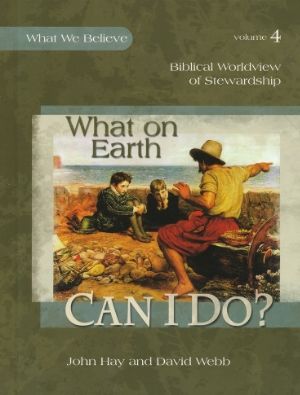
Apologia: What on Earth Can I Do? (TOS Review Crew)


I was privileged to receive the 4th book in Apologia Educational Ministries' "What We Believe" series, What on Earth Can I Do?, for review along with some additional resources; a Notebooking Journal Junior Notebooking Journal, and Coloring Book.

The "What We Believe" series is a course in Apologetics for the younger elementary crowd. I have previously reviewed the first book in the series Who is God?, and the second book Who Am I?. These books answer basic but important questions about the character of God, and individual identity. The third book in the series (Who is my Neighbor?) was also reviewed by the TOS Review Crew, with an emphasis on being a servant, spreading salt and light..

This fourth book in the series, "What on Earth Can I Do?" emphasizes stewardship principles with the following chapters:

  1. Your Story or God's Story?
  2. Who Put You In Charge? 
  3. Will You Be Found Faithful? 
  4. Where Is Your Treasure? 
  5. Where Does Your Time Go? 
  6. Whose Life Is It Anyway? 
  7. Why Isn't It Easy Being Green? 
  8. What Will Happen When The Master Returns? 
Each Chapter in this book continues in the same format as the previous books, with a couple of changes: 

  • The Big Idea~ introduction and overview of the lesson
  • What You Will Do~ quickly explains objectives
  • Short Story~ incorporates in continuing story-form concepts that are taught through the rest of the lesson. This first half of this particular book's story is set in England during World War II. The second half is set in the African Serengeti. 
  • Think About It~ thought-provoking questions
  • Words You Need to Know~ vocabulary
  • Hide It in Your Heart~ memory verses
  • Integrated Learning~ articles that integrate the Biblical concepts presented with the fields of art, science, history, and more... (Because of the backdrop of World War II, you may wish to edit your reading of some of these articles if your children are on the younger side. Personally, I didn't feel my six year old was ready to deal with some of the specifics of Hitler and the holocaust. These topics can be tricky when writing for a wide age span.)
  • What Should I Do? ~ life application of Godly character traits
  • Prayer~ for those who appreciate a "Written prayer"
  • Parables of Jesus~ "Reimagined" writings based on the Parables of Jesus. These are retellings faithful to the original intent, fleshed out with names, places, historical facts and cultural details to help better understand what is going on in the parable. 
  • Going Deeper~ Discussion questions about the parables~ 
Notebooking Journals~ 
The Junior Notebooking Journal includes:

  • Blank Note-Taking Pages~ We didn't use these, as my son is only 6, and not really at the stage of taking notes, but if you have a prolific writer, this space is just begging to be used. 
  • Coloring pages from each chapter~ one that illustrates a part of the short story. Others relate to the Bible passage, "Steward focus,"  the parable, or a concept taught in the story. I had my son choose one of the pictures to color while he was listening to me read. He's not always extremely in to coloring, so the pictures often end up being half-done~ as in he's done when I'm done reading, whether the picture is fully colored or not. ;) 
  • Words to Know~ nice for kids who aren't writing much, they only have to fill in blanks with 3 words that are right there on the page, and the lines are large for those whose handwriting is still in the primary stage. 
  • Hide it In My Heart~ Bible verse Copy-work.
  • Make a Note of It ~ Space to draw answers to some of the questions about the lesson and life application.
  • Word Puzzles (Word Searches, and Crosswords) the sizes are great for young writers, and the word searches are strictly up and down/side to side, which makes for more successful searching at a younger age. 
  • Mini Books to be cut out, assembled, and pasted into the journal.
  • My Prayer page for the child to write or draw their own prayer to God.
  • Praise Report page to record how God is answering their prayers.
  • I Spy page to write about or draw something that has shown your child God's hand working, whether in nature or a circumstance.
  • Living Out Loud page to display photos of things that your child is doing to help others.
  • Find Out More is a list of activities, books, videos and songs that can help you find out more  about people and places learned about in the lessons.

The Notebooking Journal for the older children has the same pages, but on a higher level, with a couple of changes~ instead of the coloring pages there are 

  • Think About It questions about the story read during the lesson.
  • The Make a Note of it pages have spaces for the answers to the corresponding "Make a Note of it" Life application questions in the book.
  • Do You Remember is a review page for the entire lesson.
The coloring book includes the same coloring pages that are in the Junior Notebooking Journal, but there are additional pages to color for each chapter. Definitely enough for the younger child to have a page to color for most of the days that you use the lesson, even if it takes you 2 weeks to complete each one (which is a recommended pace). 


Pros~ 

  • I really appreciate the Christian Worldview, and the stories that relate the Bible to everyday life, and young children's lives. 
  • The Parables of Jesus are interesting retellings that are also very relatable. 
  • The Notebooking Journals engage the child, kinesthetically and visually. 
  • The Coloring Book engages kinesthetically as well as auditorally, if the child is coloring while listening to you read. 
  • The Notebooking Journals include a "lesson plan" in the front so that you don't have to worry about how to pace the pages with the lesson. 
  • The Apologia website once again contains "Teacher Helps" for each lesson with additional discussion questions, and a separate document that guides the use of the coloring book~ showing which pictures correspond with which stories. 


Cons~ 

  • Keeping in mind that these books are written for grades 1-6, there are definitely sections (as I mentioned above) that families may wish to pre-read and edit if using with younger and/or more sensitive children. 
  • If you tend to soften, or avoid some portions of the Bible, or Bible stories for your younger children, this book definitely requires a pre-read. For instance, I will edit the story of Joseph and Potiphar's wife for my 6 year old~ maybe not as much for an 11 or 12 year old, but then again... 
Pro/Con~ 

  • The "Short Stories" are a little longer than I would regularly use for a family devotional, but they held my son's interest, and are well written.
  • I had to remind myself that some of the details in the parables weren't fact, but rather a possibility. ;)
  • There are definitely portions of the book where there are no punches pulled, and the stories are very plain-spoken. That can be a Pro for some families and a Con for others, so if you are concerned, definitely look this particular book over. 

I think that these Apologia materials are very worthwhile, even if I feel the need to edit them for sensitivities upon occasion. They help build a solid foundation of understanding what our role is in this world, even from a very young age. If you would like to see examples and samples, be sure to visit the Apologia pages linked below.

Not So Nutty Nitty Gritty 
You can find Apologia on Facebook, Twitter, Google+ and Pinterest.
Please click the banner below to visit the TOS Review Crew and see what others had to say. As always, I hope that this review was useful to you as you choose where best to spend your homeschool budget.
Blessings~


Click to read Crew Reviews
Crew Disclaimer

Followers

LinkWithin

Related Posts with Thumbnails